
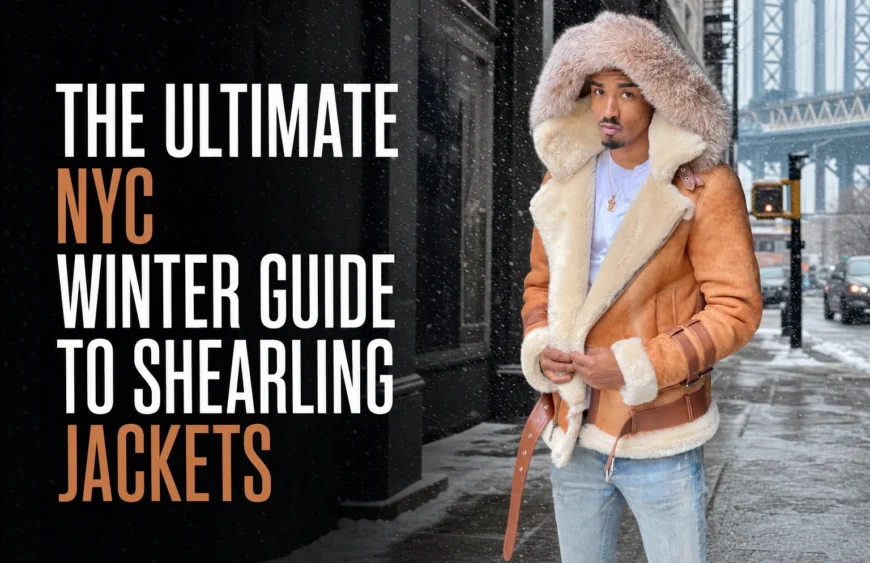
A shearling jacket in NYC is more than a cold-weather statement. Genuine shearling combines a durable outer surface with naturally insulating wool, creating warmth without the flat, technical look of ordinary winter outerwear. The right design can move from a windy morning commute to dinner downtown while keeping its shape and character.
This guide explains how to choose, style, and care for shearling in New York. You can also explore DaRucci’s current men’s shearling jackets and women’s shearling collection.
Why Shearling Works in a New York Winter
Yes. A well-constructed shearling jacket is suitable for much of a New York winter because the wool lining traps warm air while the leather or suede exterior reduces wind penetration. Warmth varies by wool density, jacket length, collar coverage, and fit. On the coldest days, add a thermal base and substantial knit rather than forcing too many bulky layers underneath.
What makes genuine shearling effective?
Shearling is a single sheepskin processed with the wool left attached. That construction matters: the outer hide provides structure and protection while the wool regulates warmth against the body. Unlike a separate synthetic lining, the two surfaces move together and develop character over time.
Look for consistent wool density, secure seams, smooth zippers, and clean finishing at cuffs and pockets. Natural variation is expected, but thin patches or rough joins can reduce comfort and longevity.
Choose a Shearling Silhouette for Your Routine
The B-3 Aviator Jacket
The B-3 has a cropped body, generous collar, and rugged flight-jacket history. It works well with denim, cargo pants, and boots. Because the collar and cuffs are prominent, it delivers strong warmth without requiring a long hem.
The Shearling Biker Jacket
A shearling biker combines an angled front, defined hardware, and substantial lining. It offers more visual edge than an aviator and is ideal for monochrome outfits. Choose a version that closes comfortably across the chest; an open jacket is less useful when the wind rises.
The Denim-Style Shearling Jacket
This silhouette uses familiar trucker-jacket proportions with the texture and warmth of shearling. It is easy to wear during the day and layers naturally over tees, hoodies, and crewneck sweaters.
Three-Quarter and Long Shearling Coats
Longer shearling protects more of the torso and legs, making it the practical luxury choice for prolonged outdoor time. The added visual weight looks best with straight, simple layers underneath.
How a Shearling Jacket Should Fit
Shearling should feel close enough to retain warmth but never restrictive. Wear the sweater you expect to use most often when checking fit. Shoulder seams should align naturally, sleeves should finish at the wrist, and the front should close without compressing the wool.
- Choose a cropped fit for mobility and a sharper streetwear profile.
- Choose a longer coat for maximum coverage and a more formal impression.
- Avoid sizing down simply to create a narrow silhouette.
- Check that the collar can close or turn up comfortably against wind.
Styling Shearling for the City
Men’s Shearling Outfits
Let the material create the interest. A brown aviator looks balanced with black denim and a cream knit. A black shearling biker works with charcoal trousers, a black roll neck, and leather boots. Distressed grey or cognac styles add texture to neutral basics without needing bright accessories.
For more options across leather categories, compare our guide to the best men’s leather jacket styles in NYC.
Women’s Shearling Outfits
A cropped shearling jacket creates contrast with high-waisted trousers, a fitted knit dress, or straight denim. Longer coats work beautifully over tonal layers and knee-high boots. Black, cream, and cognac are highly versatile; saturated colors can become the single statement in an otherwise restrained outfit.
Shearling Care After Snow and Rain
Shearling tolerates cold, but repeated saturation can mark the exterior and affect its shape. Shake off loose snow, blot moisture with a clean cloth, and let the jacket dry naturally away from radiators. Use a broad, supportive hanger and give the wool space rather than crushing it in a crowded wardrobe.
Do not use household detergents, direct heat, or generic leather polish on suede shearling. For stains or deep cleaning, choose a specialist familiar with leather and sheepskin. Our complete guide to caring for leather, fur, and shearling in an NYC winter covers storage and maintenance.
Plan for Wind, Transit, and Changing Temperatures
New York winter dressing is less about one temperature than a sequence of environments. A cold walk to the subway can be followed by a heated train, an office lobby, and another exposed avenue. Genuine shearling handles this rhythm well because its wool interior traps warmth while the leather exterior reduces wind penetration. The jacket should still open easily and allow air to circulate when you step indoors; excessive layers beneath a heavy shearling can become uncomfortable during a commute.
Length changes how the jacket performs. Waist-length aviators provide mobility and work well for driving or frequent subway travel. Three-quarter coats protect more of the torso and upper legs during long outdoor stretches. A hood adds useful coverage in wind, although a structured collar may be easier to style for work and dinner. The distressed cognac pilot shearling jacket shows the compact aviator approach, while the cognac three-quarter shearling coat gives greater coverage and a more formal presence.
Compare Details That Affect Everyday Comfort
A striking collar may attract attention, but practical details determine how often a shearling jacket gets worn. Check whether the front closure can be operated with gloves, whether pockets are deep enough for a phone, and whether the cuffs block wind without pinching. The lining should feel even across the body, with no hard ridges at major seams. If the jacket has a fur-trimmed hood, make sure the weight does not pull the garment backward when it is unzipped.
Color also changes maintenance and versatility. Black hides city marks and integrates easily with a dark wardrobe. Cognac makes the texture of shearling more visible and pairs beautifully with denim, cream knitwear, and brown boots. Navy, forest green, and burgundy are expressive without becoming difficult to coordinate. For a darker technical look, consider the black ribbles shearling jacket with fox hood; for color, the distressed green B-3 shearling jacket creates a clear focal point.
Build Outfits Around Texture, Not Bulk
Shearling already contributes visual and physical volume, so the remaining pieces should create a clean line. Straight or tapered trousers keep the lower half balanced. Fine-gauge wool, merino, cotton thermals, and uncomplicated hoodies layer more smoothly than oversized cable knits. Boots with a firm sole suit snow and slush, while clean leather sneakers work on dry days. Tonal outfits—black with charcoal, cognac with cream, navy with slate—allow the material to look luxurious without making the outfit busy.
Women can use the same principle with a fitted knit, straight jeans, tall boots, or a narrow midi skirt. A longer design such as the women’s three-quarter black shearling coat already creates drama, so restrained layers make it suitable for daytime as well as evenings. Shoppers who want to compare more silhouettes can browse the verified women’s outerwear collection.
Protect the Jacket Before the Forecast Turns
Shearling should not be treated like a waterproof raincoat. Before regular winter wear, ask a specialist which protectant is suitable for the exact finish. After light snow, shake off loose moisture, blot gently with a clean cloth, reshape the garment, and let it dry naturally on a broad hanger. Radiators, hair dryers, and direct heat can harden leather and distort the wool. Salt marks, deep stains, or heavy saturation call for professional care rather than aggressive home cleaning.
Frequently Asked Questions
Is shearling warmer than a standard leather jacket?
Usually, yes. Standard leather blocks some wind but has limited insulation. Shearling adds dense natural wool throughout the interior, collar, and often the cuffs.
Can shearling get wet?
Light snow or brief moisture is manageable when blotted and air-dried promptly. Avoid soaking the jacket and never accelerate drying with direct heat.
What color shearling is easiest to wear?
Black is sleek and urban, while cognac or dark brown highlights natural texture and pairs well with denim. Cream is distinctive but requires more careful maintenance.
Should I size up in a shearling jacket?
Use the brand’s measurements and account for your normal winter layer. You need comfortable movement and closure, but excessive room can allow cold air to circulate.
Choose a Shearling Jacket You Will Keep Wearing
The best NYC shearling jacket matches your real winter routine: cropped for movement, biker-inspired for edge, or long for coverage. Browse the DaRucci Jackets shop to compare materials, lengths, colors, and cold-weather silhouettes.





Best Jackets for Every NYC Neighborhood | DaRucci
August 27, 2026 at 3:20 pm[…] looks strong against industrial brick and skyline views while providing real insulation. Read the NYC winter shearling guide before choosing length and […]
Biker Jacket vs V-Bomber: Best NYC Style? | DaRucci
August 27, 2026 at 4:30 pm[…] If winter performance is the priority, compare both with our NYC shearling jacket guide. […]
How to Style a Varsity Jacket for NYC Streetwear
August 27, 2026 at 4:31 pm[…] Choose substantial leather, a warm lining, or fur panels. Add a thermal layer and knit while keeping enough room to close the jacket. For colder alternatives, see our NYC shearling guide. […]
How to Care for Leather, Fur & Shearling in Winter
August 27, 2026 at 4:35 pm[…] wool interior clean by wearing a base layer and allowing the jacket to air after use. Explore our NYC shearling guide for fit and winter […]